

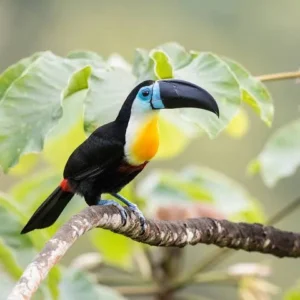
Aracari Toucan For Sale

$1,850.00
Aracari birds are native to tropical South America (mainly Costa Rica) but can be found in other woodlands. Aracari are not migratory and can live their entire lives in the same tree they were hatched in. They are social birds that roost together, sometimes up to 6 adult Toucans in one tree with their long tails folded over their backs. Their nests are made in cavities of trees and they prefer them to be made of palm tree logs in captivity so they are able to dig their nest cavity deep.
Their flocks don’t usually go beyond six and their young. The 6 adults are often the mating parents and 4 of their previous offspring. Unlike most tropical birds, the previous offspring help the parents care for and feed the young until they fledge at day 40-42. 2-4 white, andelliptical shaped eggs are laid in each clutch and the mating season is between February and June.
Their bill size does deter predators and prey a little bit, but if put to the test, would do them no good. Their bill, however, is great for picking fruit from branches they are not able to land on. Their diet, like other tropical birds, consists mainly of fruit, but on occasion, they will eat insects, lizards, small animals, or even birds of another species.
Their slender bodies and coloring usually make for great camouflage in trees, but researchers believe this is a coincidence and not an evolutionary survival trait because they can be found calling their very audible “cry” quite easily.
Be the first to review “Aracari Toucan For Sale”
Related products
Toucan Exotic Birds
Reviews
There are no reviews yet.